
How much cargo does China really control? Congress is looking to find out
Good morning! It’s National Family Day AND National Pancake Day. You should celebrate both. Have pancakes with your family. 🥞
Congress has assigned an advisory board - the U.S.-China Economic and Security Review Commission - to consolidate a report on China’s Logink, a cargo-data network that collects information from many global shipping lanes. The report, due to be released by the end of the month, is expected to give Congress a clearer picture of just how much control China has over worldwide cargo, regardless of its origin or destination.
Check out today’s featured article from Supply Chain Brain to read about the United States’ growing concerns regarding China’s enormous control over the technology and digital information that store detailed information on global shipping and cargo. ☕️

Featured Article:
Chinese Cargo-Data Network Poses Growing Risks, U.S. Analysis Says | Supply Chain Brain
“A congressional advisory body is urging legislators to strengthen U.S. defenses against China’s growing control of digital information related to global shipping and cargo, warning it could undermine national security and businesses, reports The Wall Street Journal.”
Ports & Trade 🚢
Port of Houston breaks records after west coast cargo heads east instead

With too much congestion clogging the West Coast ports, many ships rerouted to the East Coast, instead. The Port of Houston, bordering the Gulf of Mexico, had a record-breaking month in August with 382,842 TEUs handled through its terminal. That is a 20% growth since August of 2021 and a 14% increase from its previous record-breaking month this past May.
Executive Director of the Port of Houston Roger Guenther says that the port is committed to handling the massive influx of cargo both in a cost-effectively and timely manner.
Sustainability & Railroads ♻️
Amtrak intends to reduce carbon footprint with 2045 net-zero emissions goal
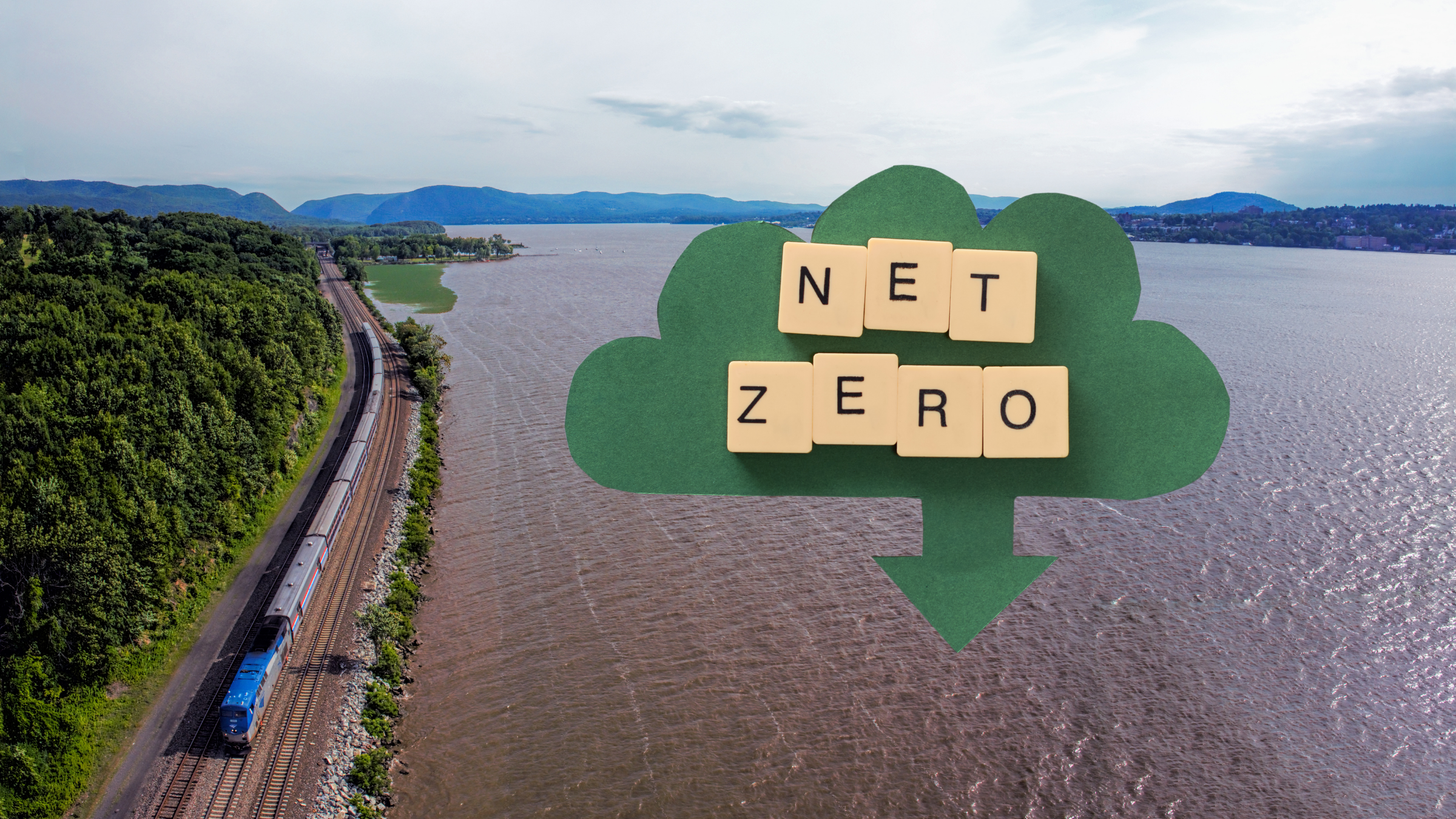
Amtrak, the passenger train company, announced its plans to become a net-zero emission rail network by the year 2045. By investing in new equipment and railroad stations, the company believes that moving in this direction will create a more suitable train network throughout the country. Its goals include utilizing 100% carbon-free electricity by 2030 and collaborating with a variety of experts for research on fuel batteries and other zero-emissions technologies entering the market.
Amtrak was congratulated by U.S. Transportation Secretary Pete Buttigieg in a statement, recognizing the company’s “ambitious commitment to further reduce its carbon footprint”.
Let’s Get Global 🌎
📲 Let’s get together. The United States, Japan, and South Korea are joining forces to secure a semiconductor supply chain that could force China from its top spot. While tensions are unstable between the South Korean and United States markets, these leading chipmaking nations are teaming up in order to underscore just how critical these devices and the minerals used to manufacture them are to the global economy. (CNBC)
⛏ Coal is back. The global energy crisis has forced many nations to turn to coal as a means of fuel. Coal, widely recognized as a cause of pollution, seems to oppose the push for green energy regulations. European countries are now willing to pay top dollar for coal from mining countries such as Botswana and Tanzania. Many blame Russia’s withholding of natural gas from the EU. (Reuters)
🚢 Save your vegetable oil, fertilizer, and aluminum! Operating manufacturing plants for these commodities has become cost prohibitive in Europe as an energy crisis rattles the continent. Metals like copper and zinc have fallen to their lowest output levels since the early 1970’s and oilseeds are now producing less than they did pre-pandemic. (AJOT)
iLevel With You
💸 “Take my money!” Not so fast… General Motors is closing the doors on its reservation queue after a reported 90,000 individuals have put their names on a waiting list for the forthcoming electric GMC Hummer pickup and SUV models. The waiting list currently extends out to 2024 and GM is concerned that the production lines could not fulfill all of its reservations if it wasn’t reeled back in. (CNBC)
⚡️ Confused about what the seemingly constant interest rate hikes could mean for your future? The Federal Reserve raised rates for the fifth time since March in another attempt to get the 40-year high inflation under control. When interest rates go up, consumer loans now can carry too high of a monthly payment for would-be home buyers or deny access to car loans. But cars and houses aren’t the ends of it - the Fed hikes could affect the labor market and lead people to spend less, hindering the economic growth of the country. (Vox)
🛻 Need a job? Ford Motor is hiring! A new Chief Supply Chain Officer, that is. The American automaker is in the market for a CSCO after third-quarter reporting converted a major parts shortage and increasing supplier costs for vehicles. Until the position is filled, Ford CFO John Lawler is taking control of the company’s supply chain operations, and Vice President Johnathan Jennings will be assisting. (Supply Chain Dive)
GET SMART
🤖 It’s no surprise that AI is all the rage. In a study released by IBM, 46% of supply chain leaders have invested in some form of artificial intelligence in the past two years. It’s not all robots and talking heads - many have invested in intelligent workflows and ecosystems through the form of programs invented to better the flow of operations in warehouses and offices, alike. (MHL News)
🚛 Get down to the nitty-gritty when it comes to truckload rates. At least, Kelson Hardwick, Director of Transportation Procurement at Walmart, thinks so. Hardwick spoke at the CSCMP Edge conference in Nashville last week, putting great emphasis in continuous education for shippers so that they can better understand the in’s and out’s of rates. (Logistics Management)
News Bag 🗞
This Week in Logistics News (September 17 – 23) | Logistics Viewpoints
Logistics Viewpoints contributor Chris Cunnane summaries some of the week’s biggest stories from September 17th through the 23rd - including Walmart’s AI push, port labor talks on the west coast, and Tesla’s new production line.
The need to know | Reuters Events
Reuters Events contributor Alex Hardwick writes about the top stories of last week, including Amazon’s axing of warehouse construction in Spain, Walmart’s holiday hiring plans, and whether the FedEx CEO can win back favor with disgruntled FedEX Ground contractors.
Fuel Tech ♻️
'Logistics should not be bullied into being the vanguard for emissions reductions' | The Loadstar
Loadstar contributor Gavin can Marle writes about the difficulties being faced in Australia to decarbonize their fleets.
Ports 🚢
SC Ports offers deep harbor, berth availability | AJOT
AJOT shares an article examining why South Caroline ports have handled container ships so well, specifically in Charleston. The port has a deep harbor and can allow “mega-container ships” at any time of day or night, regardless of tide.
Business Strategy 💡
Regionalize for resilience | Resilinc
Resilinc’s Editorial Team shares an article explaining why companies should consider regionalizing to avoid supply chain disasters severely affecting their output.
Tech 📟
IBM CSCO & COO survey shows tech & sustainability key areas | Supply Chain Digital
Supply Chain Digital contributor Sean Ashcroft writers about the areas of supply chain strategy that are quickly adopting new tech practices.





The Workday Dash is an aggregation of articles regarding the transportation logistics, trucking, and supply chain industries for July 31, 2025, from iLevel Logistics Inc.